How to Organize a Small Coffee Cabinet for Realistic Mornings
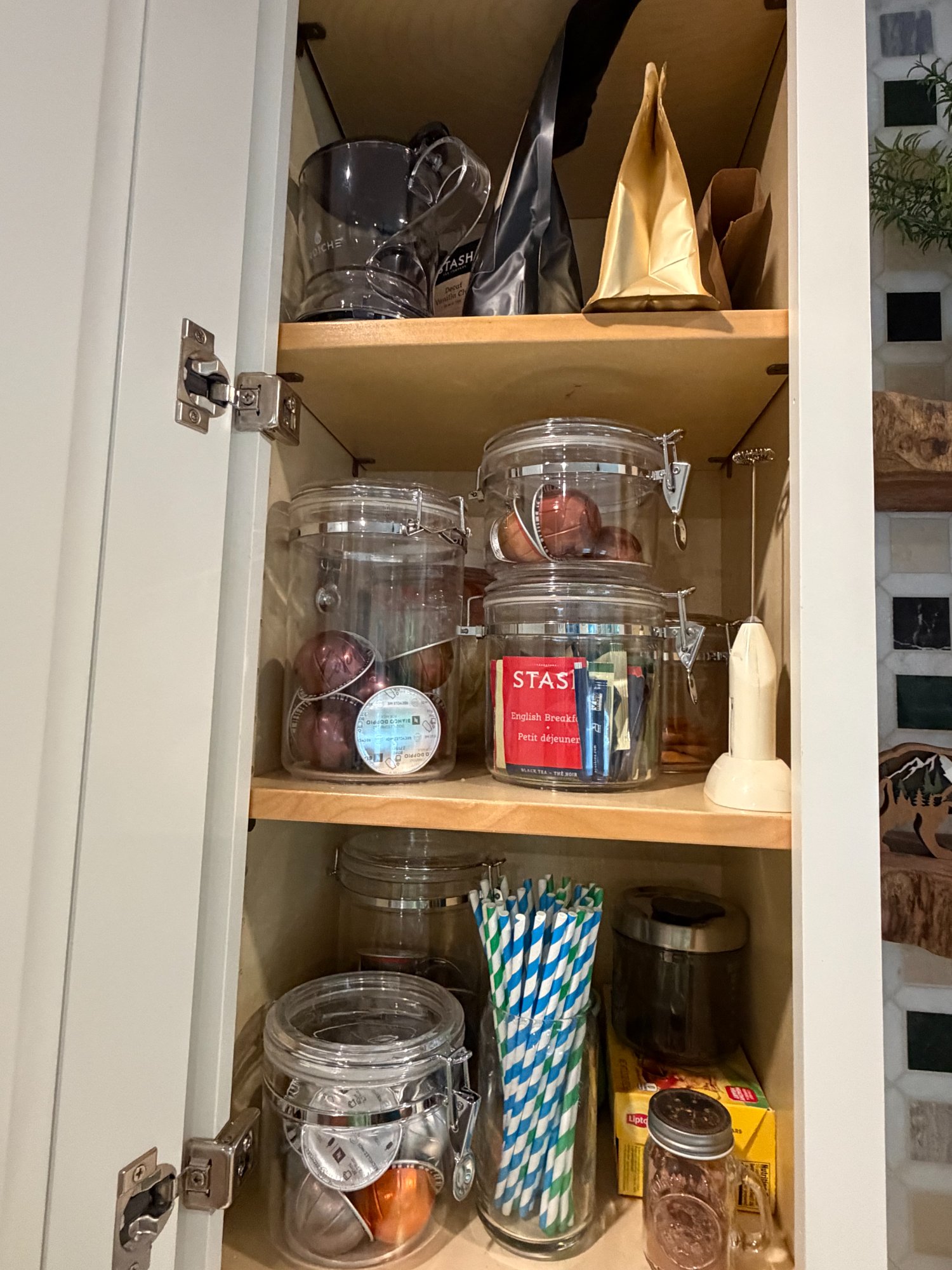
Mornings in a busy household are won or lost in the margins. If you are rushing to get kids ready, pack lunches, and log onto work on time, a beautiful, but dysfunctional coffee bar is a daily friction point. Most coffee cabinet organization advice focuses on aesthetic symmetry...decanting every single item into identical, labeled containers and filling shelves with decorative knick-knacks. That is not functional for me as a working mom. Here is the exact, zero-fluff organizational blueprint for a high-efficiency coffee cabinet, designed around a simple, logic-based hierarchy of use.
The Golden Rule: Organize by Frequency of Use, Not Aesthetics
The key to a fast morning is reducing the physical distance my hand has to travel for my first latte. To achieve this, the cabinet is divided into three zones: The Landing Zone (daily essentials), The Prep Zone (mid-tier accessories), and The Storage Zone (seasonal items).
Shelf 1: The Landing Zone (Bottom Shelf)
The most valuable real estate in my cabinet. If you touch it every single morning, it goes here.
* Daily Nespresso Pods: Store your high-use pods (like double espressos and standard morning coffees) in wide-mouth, canisters right at the front. The wide mouth allows you to grab a pod in a fraction of a second without wrestling with cardboard boxes.
* Cocoa Powder/Cinnamon: Kept in easily accessible containers next to the pods.
* Everyday Straws: Store paper straws vertically in a heavy glass jar. This keeps them clean, organized, and easy to grab for iced lattes or kids' morning drinks.
* Daily Tea Bags: Place immediate-use black teas (like Lipton) in the back-right corner where they are accessible but do not crowd the primary coffee zone.
Shelf 2: The Prep Zone (Middle Shelf)
Items we use daily, but only during the prep or finishing stages of your drink.
* The Milk Frother: Store your handheld electric frother vertically on its stand here. Keeping it on a stand prevents the whisk from getting bent or damaged, and keeps the cabinet floor clean of milk residue.
* Alternative Pods & Specialty Teas: Stack smaller, airtight containers to maximize vertical space. Place your decaf pods, specialty herbal teas (like English Breakfast), and weekend blends here.
* The Benefit of Canisters: Using clear, locking-lid canisters on this shelf serves two purposes: you can instantly audit your stock levels at a glance, and it protects tea bags from absorbing surrounding coffee odors.
Shelf 3: The Storage Zone (Top Shelf)
For items you only access once a week, or once a season.
* Coffee Beans & Backstock: Whole coffee beans, extra bags of grounds, and unopened boxes of tea.
* Specialty Accessories: Items like loose-leaf tea steepers, French press components, or descaling kits that are only used during deep cleans or weekend hosting.
The "Other Side" System: The Mug Rotation
To keep our primary coffee counter clean, I store our mugs in the adjacent cabinet or the opposite side of the coffee bar.
We apply a strict rotation strategy:
1. Lower Shelves (the current season): Keep our most functional, daily-used mugs here. In October, these become our cozy autumn mugs; in December, holiday mugs; in July, a simple glass mug for iced coffee.
2. Top Shelf (out-of-season storage): There is no reason a Christmas mug should be taking up valuable, easy-to-reach cabinet space in June.
Some links on this site are affiliate links — meaning if you buy something I recommend, I may earn a tiny commission at no extra cost to you. I only ever share things I genuinely use and love. Thanks for supporting this little corner of the internet. 💚
Get Thriving-ish on Substack
Sharing lessons I'm learning powered by sarcasm and double shots of espresso. Articles every Tuesday. Notes daily.
Subscribe