Pantry Organization That Actually Works
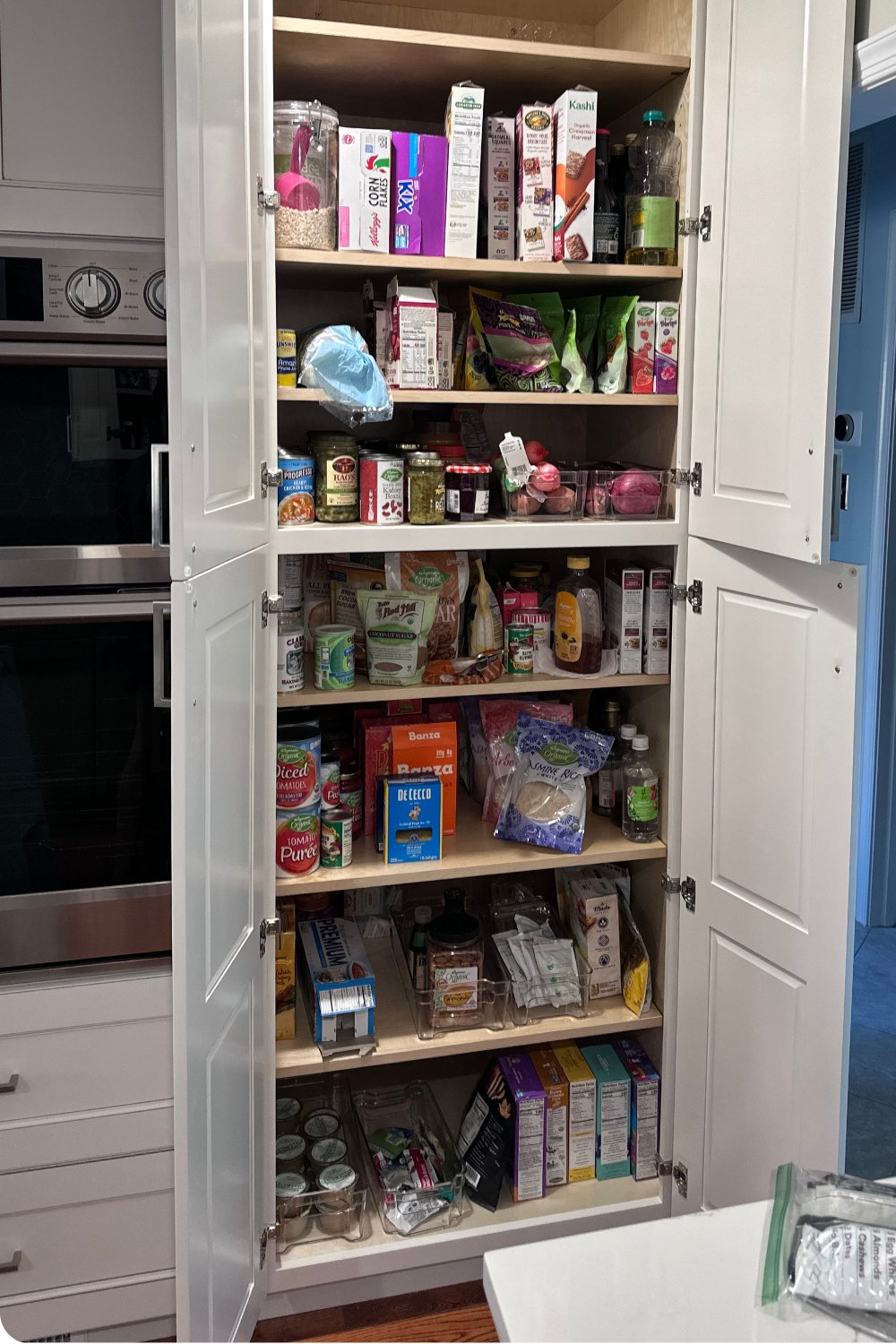
At some point, pantry organization became synonymous with decanting everything into matching acrylic containers labeled in perfect handwriting. And honestly? I tried it.
The problem is that real life doesn’t work like a Pinterest pantry after a grocery haul. Chips come in weird bags. Costco-sized snacks don’t fit. Kids destroy systems. Half-empty boxes multiply overnight. And suddenly you’re handwashing twelve containers just to store crackers.
I realized I didn’t actually need a prettier pantry. I needed a pantry that functioned with less effort.
So I stopped organizing around aesthetics and started organizing around how we actually use food.
That’s when everything got easier.
My Pantry Organization Philosophy
My pantry isn’t organized by:
color
packaging
matching bins
or “Instagram worthy” symmetry
It’s organized by:
frequency of use
independence
cooking workflow
and visibility
Because if you can’t see things, you buy duplicates. If the system is too complicated, nobody follows it. And if you need to fully reset it every weekend, it’s not actually sustainable. The goal isn’t perfection. The goal is reducing friction.
The Pantry Shelf System That Actually Works
Instead of containers for everything, I assign zones to shelves. Each shelf has a purpose. That’s it.
Bottom Shelf = Kids Zone
This is where I keep:
snacks
applesauce
bars
easy breakfast items
lunchbox staples
The kids can reach it themselves, which means:
fewer questions
less climbing
and less pantry chaos
This shelf takes the most abuse, so keeping it low-stakes matters. No fancy organization required.
Baking Shelf
All baking ingredients stay together:
flour
sugars
chocolate chips
baking soda
sprinkles,
cupcake liners
When I bake, I don’t want to hunt across five cabinets. One zone. One workflow.
I do use a few bins here for loose packets and small items, but I’m not decanting flour into matching containers like I’m running a boutique bakery.
Dry Goods Shelf
This is the “everyday staples” shelf:
crackers
rice
grains
nuts
pasta sides
oatmeal
tortillas
breadcrumbs
These are the foods constantly rotating through weekday meals, so visibility matters more than aesthetics. If something gets buried behind a matching bin, it basically ceases to exist.
Italian Shelf
This one makes me laugh, but it genuinely works.
All:
pasta
pasta sauce
canned tomatoes
olive oil
breadcrumbs,
and Italian-style pantry staples
Canned Goods Shelf
Beans
Pickles
Broth
Soups
Tomatoes
Tuna
Heavy things grouped together just makes sense. No bins. No labels. No unnecessary complexity.
Breakfast Zone
Oats
Protein shake supplies
Cereal
This shelf supports the morning rush, which means it needs to stay simple and fast. Morning systems fail when they require too much thought.
Top Shelf = Sparse Use Storage
This is where the awkward stuff goes:
backup snacks
seasonal baking items
overflow paper goods
25 boxes of Annie's Mac n' Cheese
The point is not to optimize this shelf. The point is to get infrequently used stuff out of the way.
What I Actually Use (And Skip)
What I DO use
a few bins for loose packets/snacks, onions, garlic, potatoes
clear categories
vertical space
What I DON’T use
decanting everything
matching containers for aesthetics
complicated systems
organizing by color
“perfect pantry” expectations
Because maintenance matters more than the initial setup.
The Biggest Pantry Mistake
The biggest pantry mistake is organizing for the photo instead of organizing for your actual life.
A system that only works immediately after a restock isn’t really a system.
A functional pantry should:
survive a busy week
survive kids
survive hauls
and still make cooking easier
That’s the benchmark.
My Actual Goal With Pantry Organization
I’m not trying to create a showroom pantry.
I’m trying to:
stop buying duplicates
make weeknight cooking faster
reduce visual clutter
and make the kitchen easier to function in every day.
That’s it. And honestly, assigning shelves by purpose did more for our pantry than any matching container ever did.
Some links on this site are affiliate links — meaning if you buy something I recommend, I may earn a tiny commission at no extra cost to you. I only ever share things I genuinely use and love. Thanks for supporting this little corner of the internet. 💚
Get Thriving-ish on Substack
Sharing lessons I'm learning powered by sarcasm and double shots of espresso. Articles every Tuesday. Notes daily.
Subscribe